
Six legs.
Eighteen joints.
An open-source, Arduino / STM32-based hexapod for multi-legged locomotion and bionics research, bridging basic microcontroller programming and complex multi-joint movement synchronization.
- 18-DOF
- 3 per leg × 6 legs
- 2–80 cm
- Ultrasonic sensing
- 60–120 min
- Continuous runtime
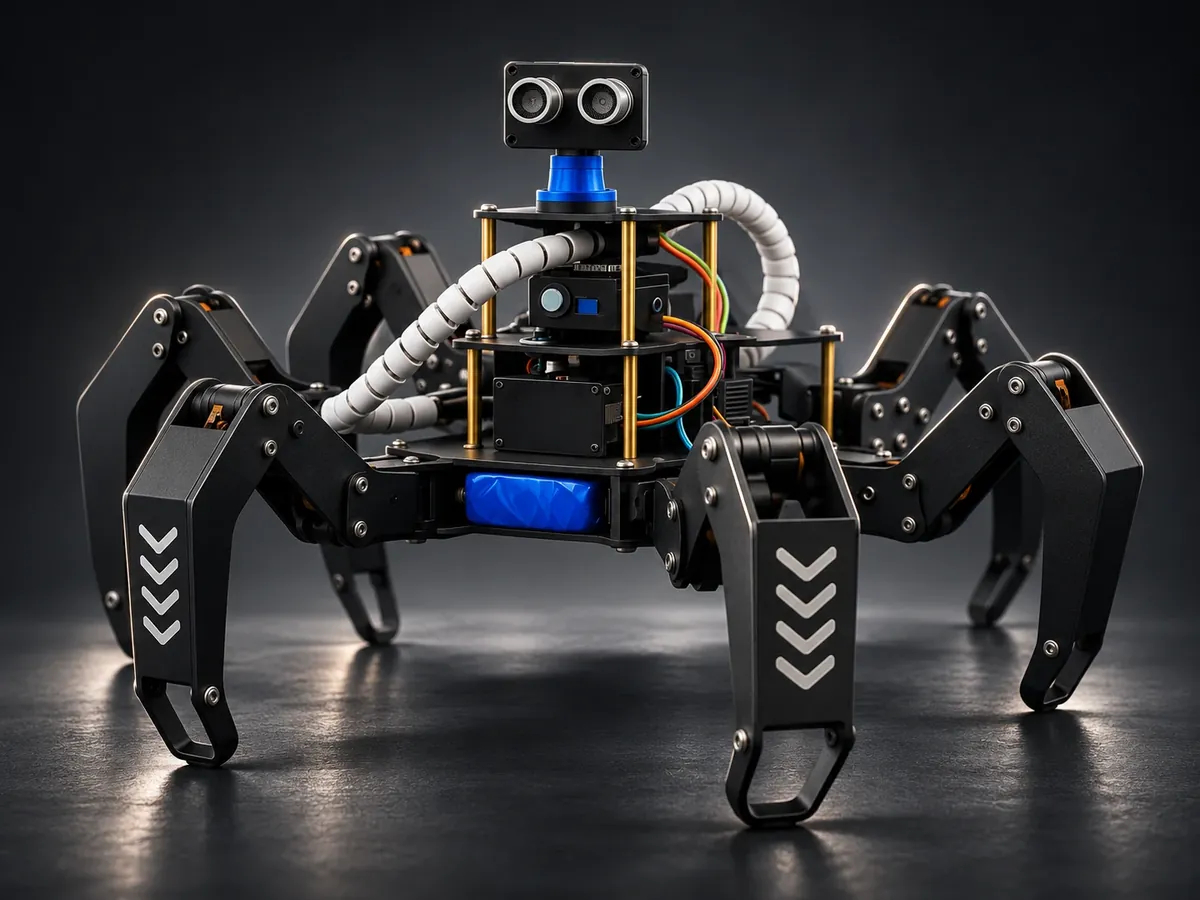
See HexaBot in Action
What It's Made Of
Every part students will read from, drive, or build on.
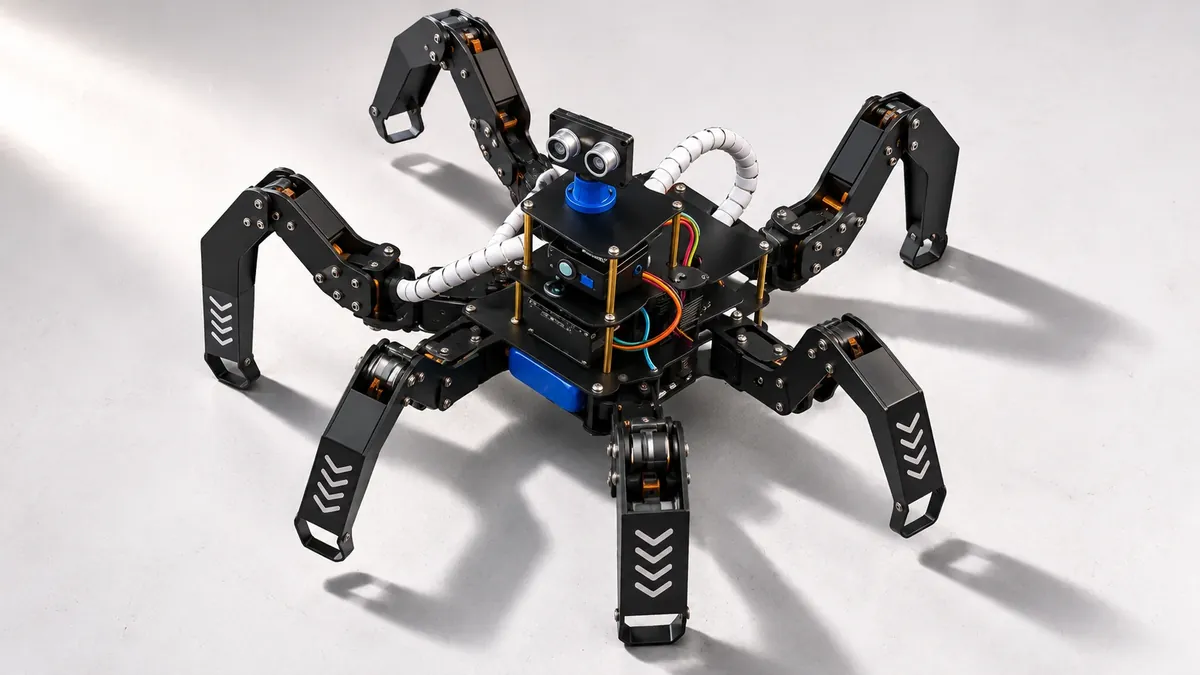
Sees obstacles ahead, for collision avoidance, spatial mapping and maze solving.
Three More Modules on the Robot
Taught on the robot itself, with its sensors, bracket and gamepad.

Sensor & Hardware Fusion
Custom secondary projects built by attaching extra electronic modules directly to the main control board.

Spatial Mapping & Maze Solving
Using the ultrasonic, touch and colour sensor data to write spatial-mapping and maze-solving algorithms.
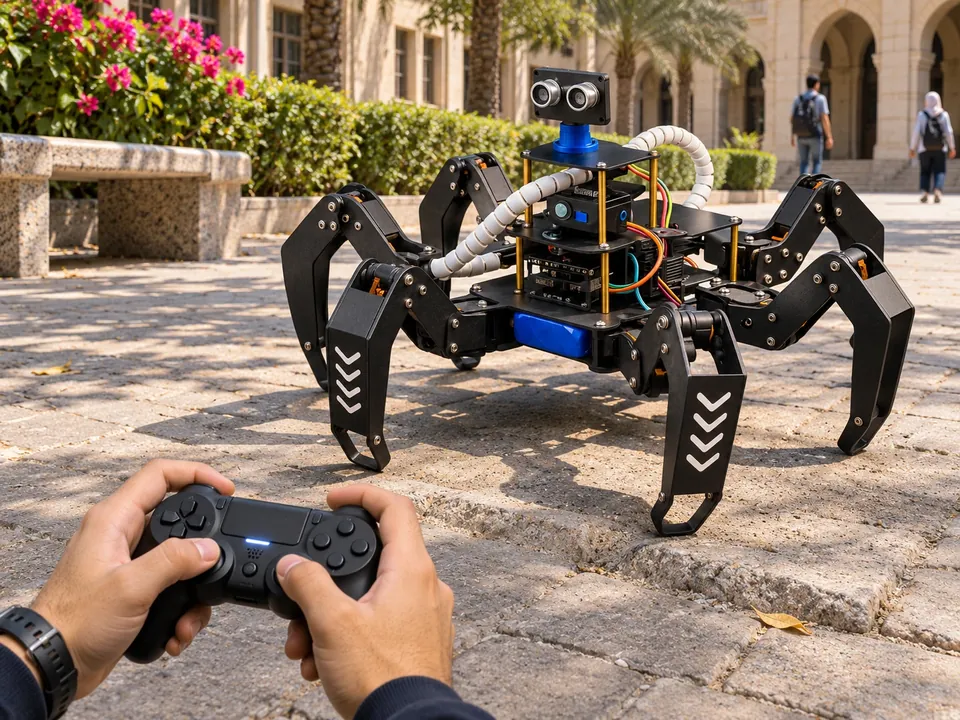
Wireless Teleoperation
Driving the robot live from the ergonomic gamepad controller.
Open From the Drivers Up
HexaBot runs on an entirely open-box ecosystem, built to slot into engineering curricula. Pick a layer to see what's in it.
What the software reads from and drives.
Everything in the Kit
A complete, self-contained kit with everything needed to run university lab sessions straight away.

HexaBot Robotic Chassis
Fully assembled 18-DOF hexapod structure with the high-strength alloy back bracket.

Intelligent Actuator Set
18 high-voltage intelligent bus servos with internal metal gears and precision potentiometers.
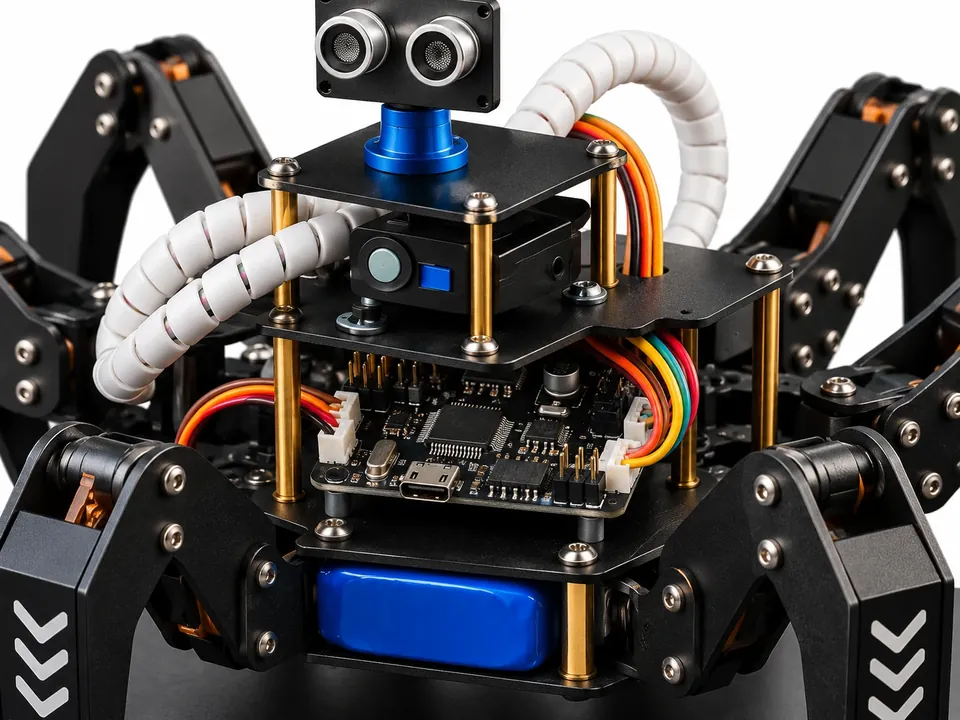
Main Control Unit
1 pre-installed Robox Hexapod control board (Arduino / STM32).

Sensing Module
1 ultrasonic distance sensor, 1 touch sensor and 1 colour sensor, with modular attachment cables.

Wireless Teleoperation Kit
1 dedicated ergonomic gamepad controller paired with a companion wireless receiver.
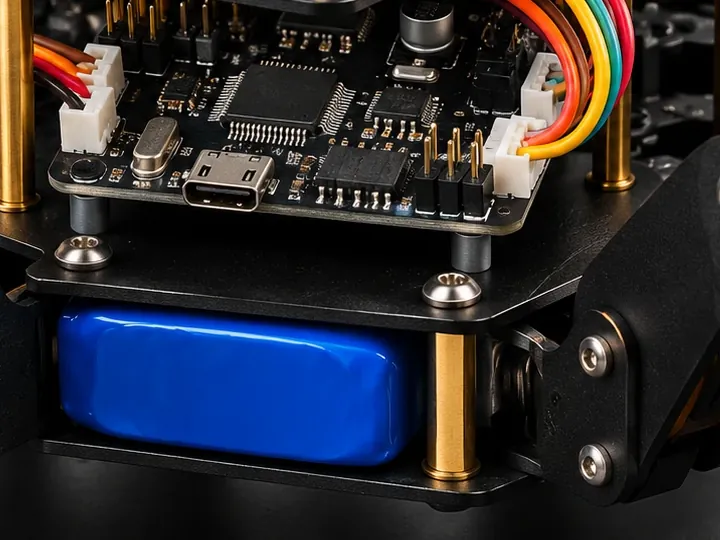
High-Output Battery Pack
1 long-lasting 12 V 8000 mAh 10C lithium battery.
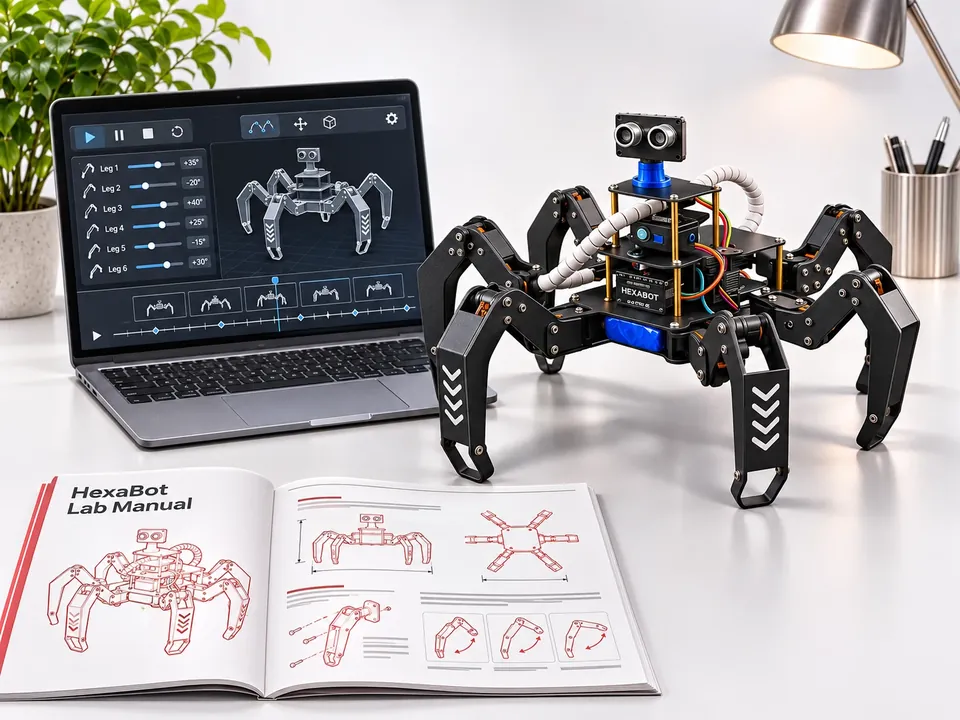
Software & Media Suite
Visual PC control software, open-source code libraries and an integrated manual: lab manual, step-by-step experiments and operation manual.
Four Labs You Can Run Right Here
Each lab below is a core competency from the HexaBot curriculum, simulated so you can try it now.
Three Legs Up, Three Legs Down
Three legs move together while the other three hold a tripod under the body, so it stays balanced over uneven ground. Watch the support polygon and the stability margin as the legs swap.
- Feet on the ground
- 3 of 6
- Stability margin
- 98 mm
- Duty factor β
- 0.50
- Body speed
- 96 mm/s
v = stride · f / βmargin = min dist(CoM, support edges)- Pause mid-step and find the tripod holding the body up.
- Switch to Wave and compare the stability margin and the speed.
- Lengthen the stride and see what happens to the margin.
 On the real robot
Technical Details
See It Up Close
Bring state-of-the-art bionics and multi-joint kinematics to your laboratory.
- Designed & built in-house
- Local engineering support
- Ready for your lab
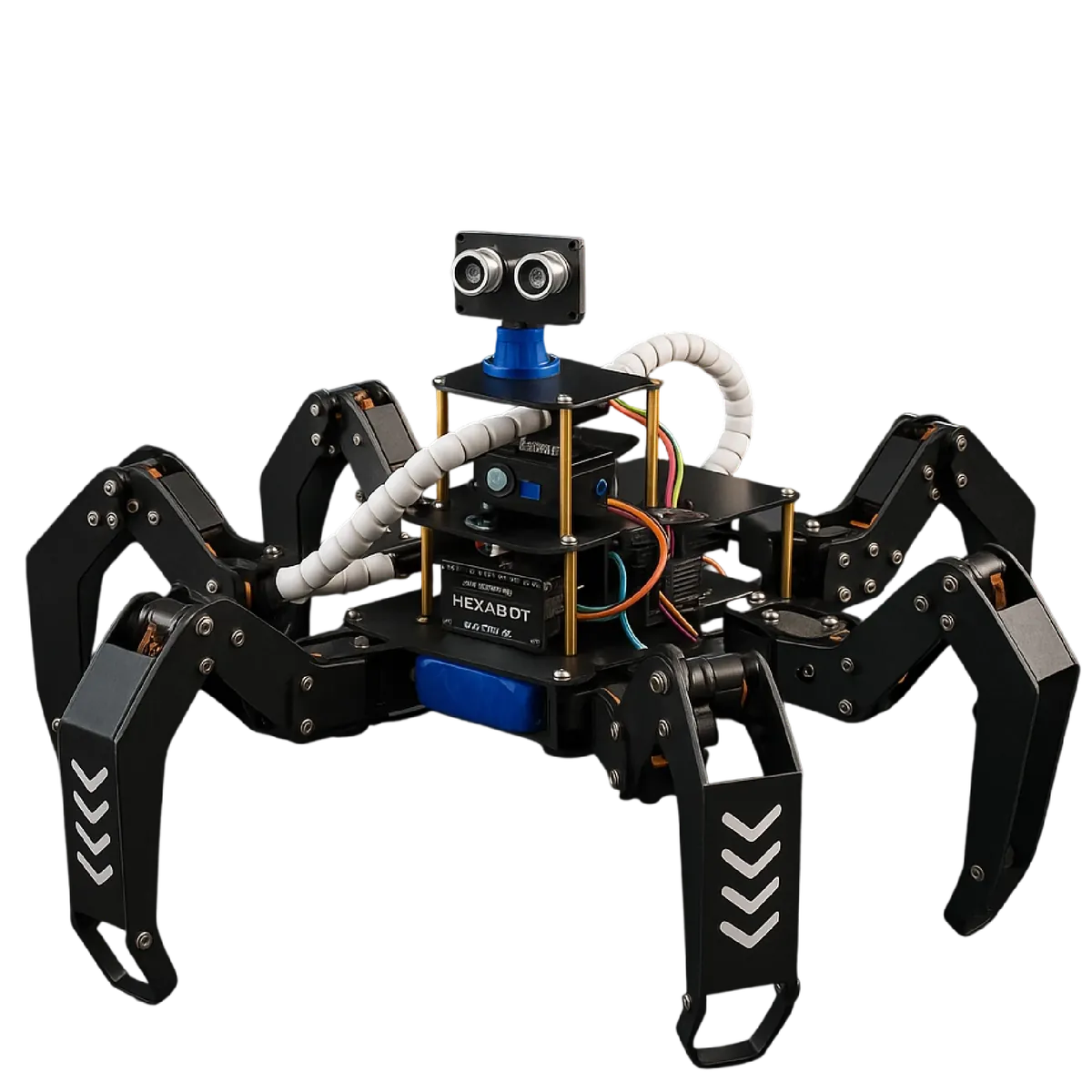
HexaBot is designed and built by Robox Industries.